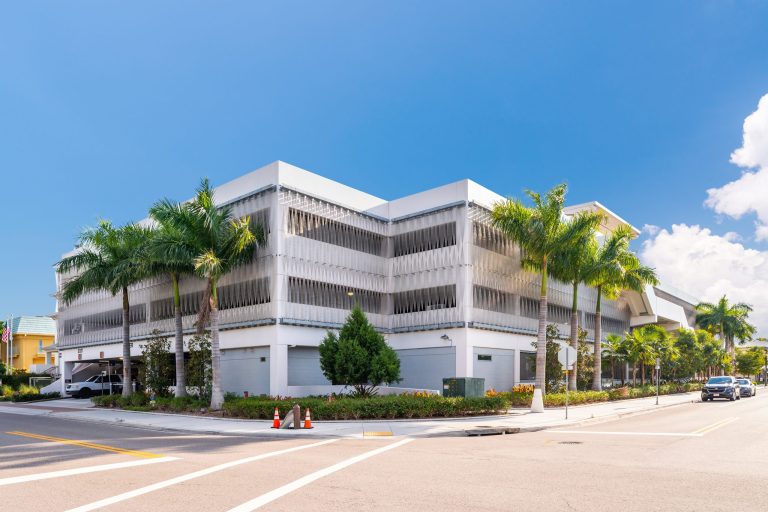
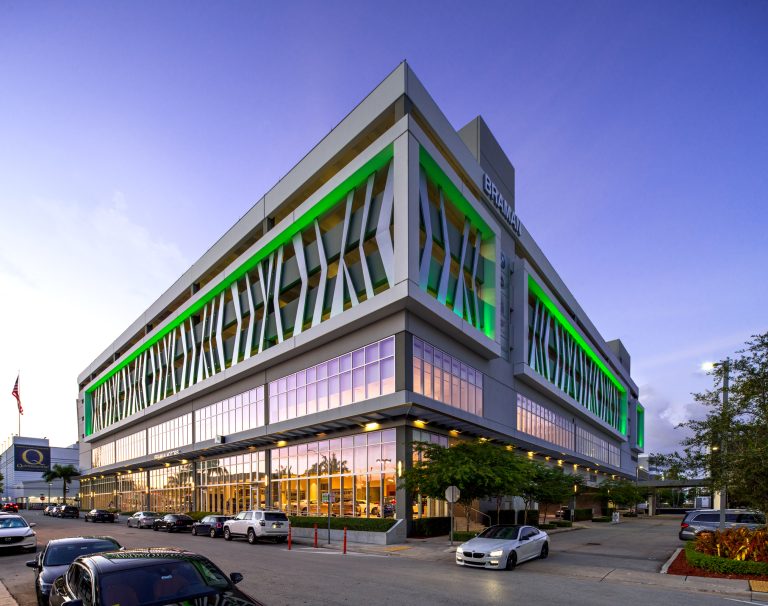
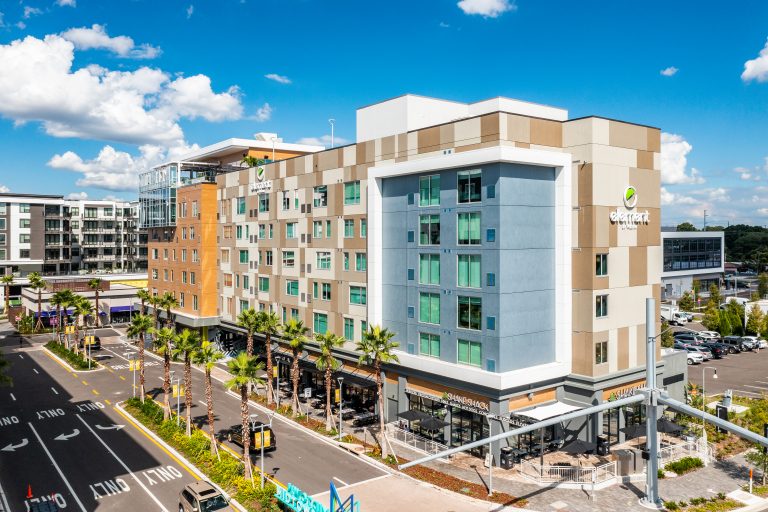
Warehouses and distribution centers are built for efficiency, and owners care about three things: speed, durability and operating cost. Precast concrete wall systems deliver on all three, and they are widely used for industrial and logistics buildings.
Fast enclosure
Large precast wall panels are produced while the site and foundations are prepared. Once they arrive, a crew can enclose a large building quickly, getting the roof on and interior work started sooner. For logistics tenants with firm move-in dates, that speed matters.
Durable walls that take a beating
Warehouses see forklifts, dock activity and heavy use. Precast walls resist impact, abrasion, moisture and pests, and do not need regular painting or patching in the way many other wall types do.
Insulated panels for efficiency
Insulated precast panels combine concrete layers with continuous insulation, which supports energy-efficient operation, particularly for conditioned or temperature-controlled space. See our guide to insulated precast concrete wall panels.
Fire and security
Concrete walls are noncombustible and can provide fire-resistance ratings that may help with code compliance and insurance considerations. Solid walls also provide strong physical security for stored goods.
Tall walls and big buildings
Prestressed precast panels can be tall and slender, which suits high-bay buildings. Panel size is limited by plant forms, shipping and lifting equipment, so work with the producer on heights and widths.
Flexibility for the future
Panels can be designed with openings for dock doors, windows and louvers, and with provisions for future expansion. Planning for expansion in the original design can save time and money later.
Precast vs. tilt-up for warehouses
Tilt-up is also common for simple warehouse boxes. Precast is often the better choice when you need a specific finish, taller panels, faster enclosure, a constrained site without room to cast panels, or insulated panels. Read our comparison of precast vs. tilt-up.
Typical uses
- Distribution and fulfillment centers
- Manufacturing plants
- Food processing and cold storage facilities
- Data centers and telecommunications buildings
- Auto dealerships and service centers
Questions to ask your producer
- What panel heights and widths are possible?
- What insulation options are available?
- How are dock doors and openings handled?
- What is the delivery and erection schedule?
- Can the design accommodate future expansion?
Start your project
Learn more about our warehousing and manufacturing work, or contact the Coreslab plant nearest you.
This article is general information, not engineering advice. Final design must be completed by a licensed engineer.
FAQ
Frequently asked questions
Can precast be used for warehouses?
Yes. Precast wall panels are used on warehouses, distribution centers and many other industrial buildings.
How tall can precast wall panels be?
Heights depend on panel thickness, prestressing, and plant, shipping and erection limits. The producer can confirm what is practical for your project.
Are precast warehouse walls insulated?
They can be. Insulated sandwich panels include a continuous layer of insulation between two layers of concrete.
Featured projects