

Data Centers / Benefits
Benefits of Precast Concrete Data Centers
Benefits
Why more data center teams are choosing precast
A data center has to be built fast, protect what is inside and run for decades with little maintenance. Precast concrete is manufactured in a controlled plant environment and installed quickly on site, which makes it a natural fit for these buildings.
- Shorter construction schedules
- Strong, long-span structures
- Plant-controlled quality
- Durable, low-maintenance buildings
- Resilience to fire, wind and impact
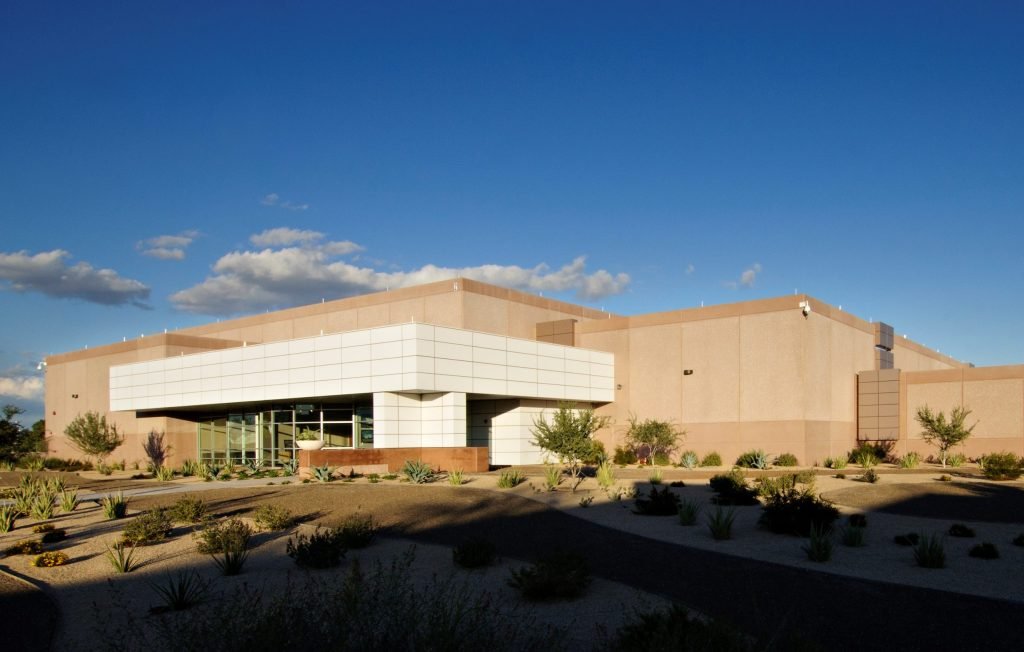
Speed
Faster construction means faster deployment
Precast is made off site while site work is under way. When the foundations are ready, so are the components.
- Parallel workManufacturing and site preparation happen at the same time.
- Sequenced deliveryPieces arrive in the order they are installed, with less material stored on site.
- Quick enclosureWalls and roof go up fast, so interior trades can start sooner.
- Fewer weather delaysCasting indoors keeps production moving in any season.
Performance
Engineered for mission-critical performance
Data centers carry heavy equipment and cannot afford downtime. Precast concrete gives the structure strength and resilience.
- High load capacityFloors and roofs can be designed for heavy mechanical and electrical equipment.
- Long spansPrestressed double tees reduce the number of interior columns.
- Non-combustibleConcrete does not burn, which helps protect the building and its contents.
- Wind and impact resistancePrecast buildings can be designed for extreme wind. Our Ritter Communications data center was designed for 250 mph winds.
Quality
Improved quality through controlled manufacturing
Every component is cast in a plant, under consistent conditions, by an experienced crew.
- Consistent componentsRepeatable forms and processes give uniform pieces.
- Inspected before shippingComponents are checked in the plant before they leave for site.
- Less site congestionMore work in the plant means fewer trades and less activity on site.
- Finish optionsArchitectural form finishes, colours and textures are built into the panel.
Sustainability
Supporting more sustainable construction
Precast concrete buildings are built to last, and plant production keeps waste low.
- Less wasteForms are reused and materials are measured precisely in the plant.
- Long service lifeDurable concrete structures need little maintenance over time.
- Thermal performanceInsulated wall panels combine structure, insulation and finish in a single component.
- Our commitmentSee how Coreslab approaches sustainability across its plants.Sustainability at Coreslab →
Partnership
Why partnership matters
The benefits of precast are greatest when the precaster is part of the team from the start. Coreslab offers design, manufacturing and installation, so one team carries the precast from first sketch to final piece.

Build your next data center with Coreslab
From early design input through manufacturing and installation, our team is ready to help.
Talk to us
Request a consultation
Tell us about your data center project and choose the Coreslab location nearest your site. Your message goes straight to that plant's sales team.
FAQ
Frequently asked questions
Why is precast concrete used for data centers?
It combines a fast construction schedule with a strong, durable and non-combustible structure. Components are manufactured in a plant under controlled conditions and installed quickly on site.
How does precast affect the construction schedule?
Because components are cast while site work is under way, the structure and envelope can be installed as soon as foundations are ready. That shortens the overall schedule compared with building everything on site in sequence.
Can a precast data center be designed for severe weather?
Yes. Precast buildings can be designed for extreme wind and impact loads. The Ritter Communications Data Center supplied by Coreslab in Jonesboro, Arkansas was designed to withstand 250 mph winds.
How does precast perform over the long term?
Precast concrete is durable and needs little maintenance. Insulated wall panels also provide a continuous layer of insulation as part of the building envelope.