
Hollow core planks are produced in a range of depths. Choosing the right one is a balance between span, load, fire rating, floor-to-floor height and cost. Here is how the key factors work together.
Common hollow core depths
Depths vary by producer and by the casting equipment at each plant. Coreslab plants produce hollow core in depths ranging from 6 inches up to 14 inches, with 8, 10, 12 and 14 inch planks among the most common sizes. Thicker planks carry more load over longer spans, while thinner planks suit shorter spans and lighter loads.
What controls how far a plank can span
- Plank depth: A deeper plank has more capacity and stiffness.
- Superimposed load: Occupancy matters. Residential floors, offices, classrooms, libraries and parking decks carry different design loads.
- Prestressing strands: The number and placement of strands in the plank changes capacity.
- Topping: A cast-in-place concrete topping adds stiffness and can increase capacity and help with diaphragm action.
- Fire-resistance rating: The required rating can influence minimum thickness and cover.
- Deflection and vibration limits: Some buildings, such as healthcare and laboratories, may have stricter performance requirements.
Use the load tables
Producers publish load tables for each plank depth. They show the allowable superimposed load for a given span, with or without topping. A designer picks the depth that meets the span and load, then confirms the details with the producer. Load tables from several Coreslab plants are available in our resources library.
Depth and building height
Plank depth affects floor-to-floor height. In a multi-story building, a few inches saved on every floor can add up to extra stories within a height limit, or reduced exterior wall area. Hollow core is efficient because its depth is small relative to span, and its flat underside leaves room for ceilings and services.
Toppings, bearing and connections
The span table is only part of the picture. Bearing length, connection to supports, topping design, diaphragm requirements and openings all need to be coordinated by the design team and the producer. Engage the precast producer early so these details are resolved before drawings are finalized.
Get a recommendation for your project
If you have a span and load in mind, our teams can help select a depth and estimate the work. Learn more about our design and engineering services or contact the plant nearest you.
This article is general information, not engineering advice. Final design must be completed by a licensed engineer using the producer's current load tables.
FAQ
Frequently asked questions
How thick are hollow core slabs?
Typical depths run from about 6 inches to 14 inches depending on the producer. Coreslab plants produce several depths, and availability varies by plant.
How far can a hollow core slab span?
Span depends on depth, loading, strands and topping. Use the producer's load tables, or ask a Coreslab engineer to confirm for your project.
Do hollow core slabs need a concrete topping?
Not always. A topping is common where extra stiffness, a level surface, or diaphragm action is required. The engineer of record decides based on the design.
Featured projects
Precast solutions in action
 Russellville High School Gym – Russellville, AR
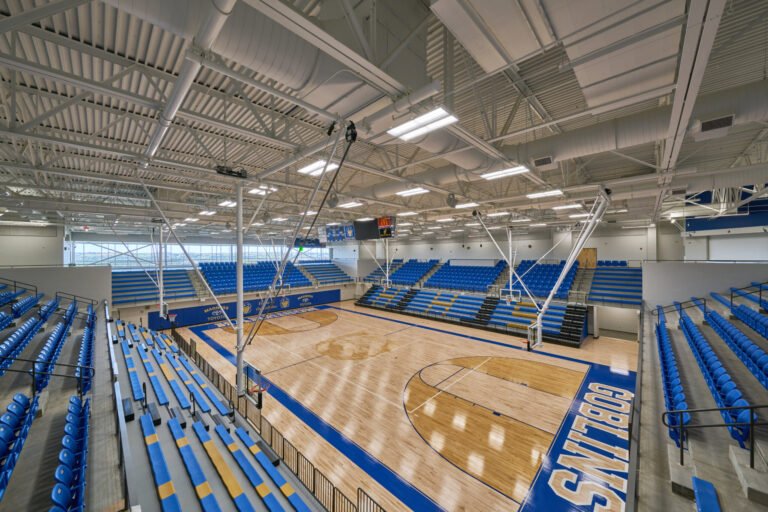 Harrison High School Gym – Harrison, AR
 Smithfield Middle School – Gymnasium Addition – North Richland Hills, TX
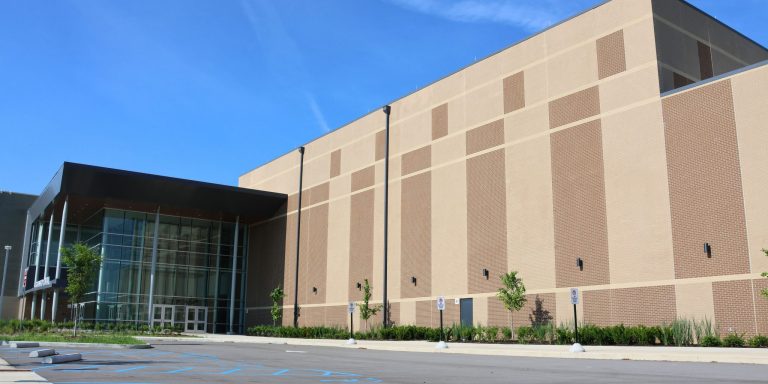 Greenfield Central High School Auditorium – Greenfield, IN
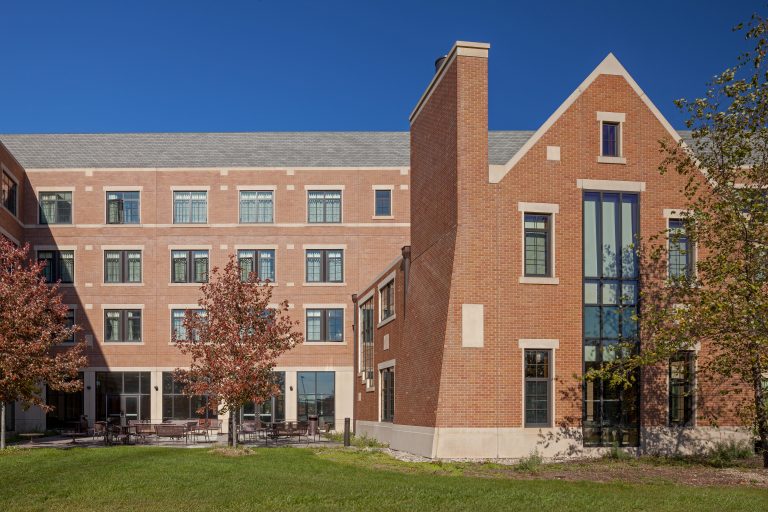 Beacon Hall, Valparaiso University – Valparaiso, IN
 Texas A&M University College of Dentistry Clinic and Education Building – Dallas, TX